
Praia a Mare
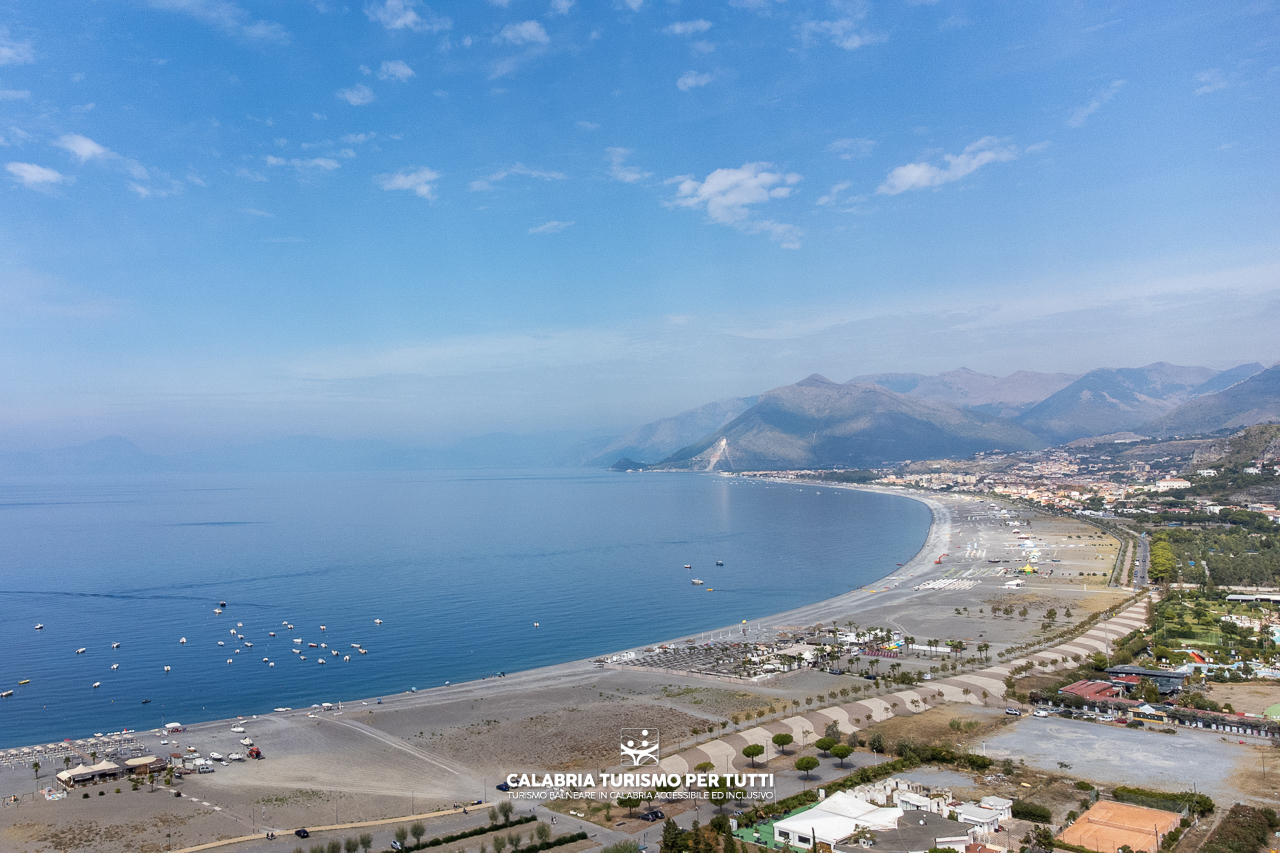
Praia a Mare is an Italian municipality of 7,462 inhabitants in the province of Cosenza, Calabria. It is located on the Riviera dei Cedri, about 100 kilometres north of Cosenza.
The municipal territory is characterised by a varied coastal landscape, with white and golden sandy beaches, sheer cliffs and hidden bays. The climate is Mediterranean, with hot summers and mild winters.
Praia a Mare is a popular tourist destination, both for its natural beauty and its lively nightlife. The municipality has numerous accommodation facilities, including hotels, tourist villages and campsites.
Religious itinerary
The first is a religious itinerary that leads to the discovery of the Sanctuary of the Madonna della Grotta.
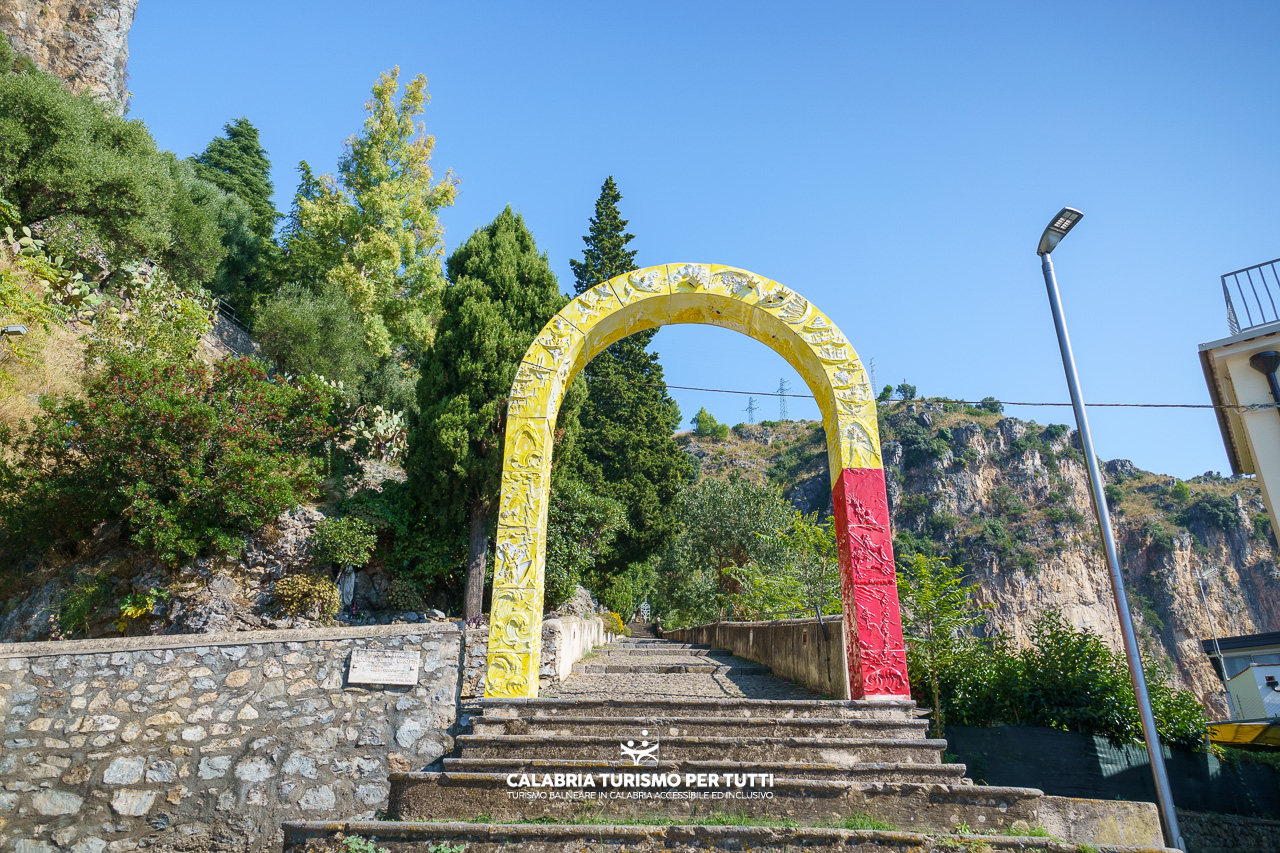
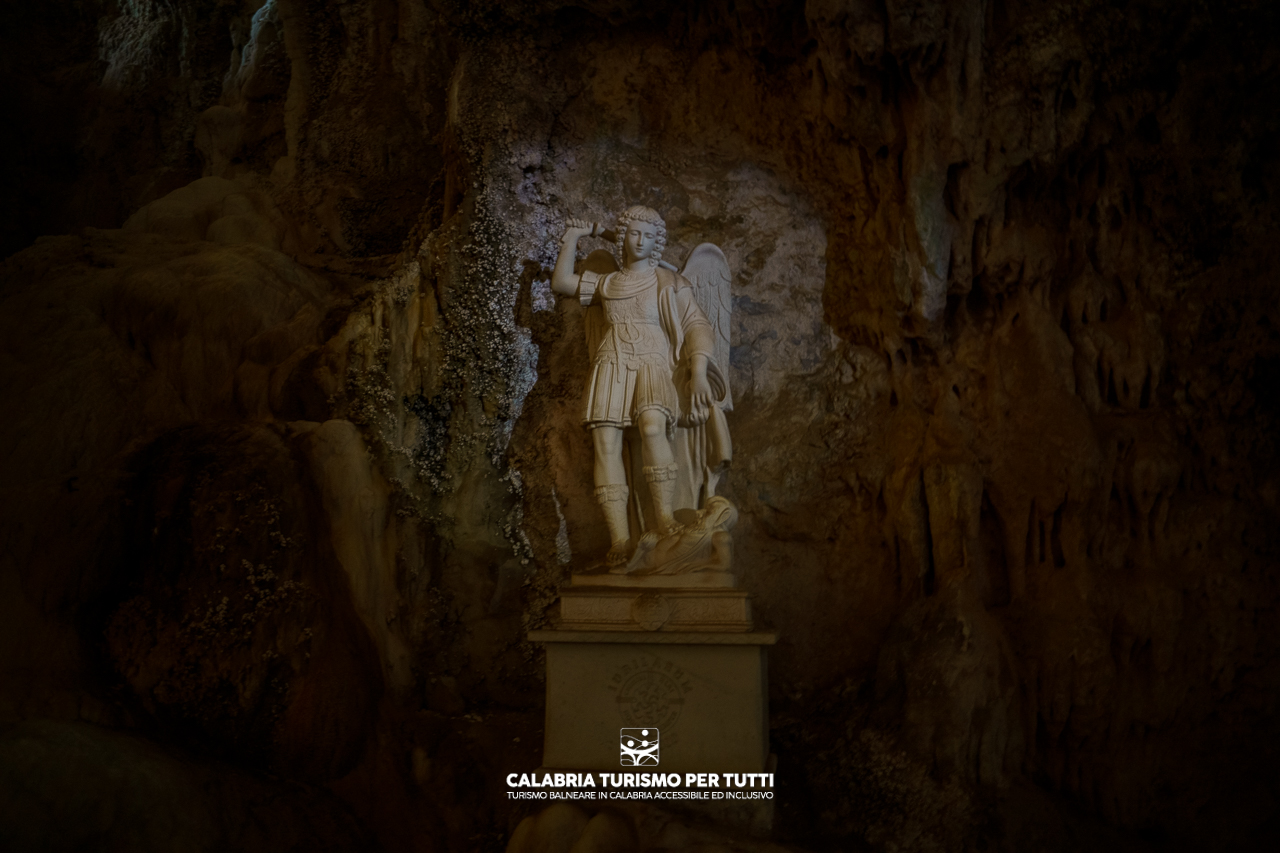
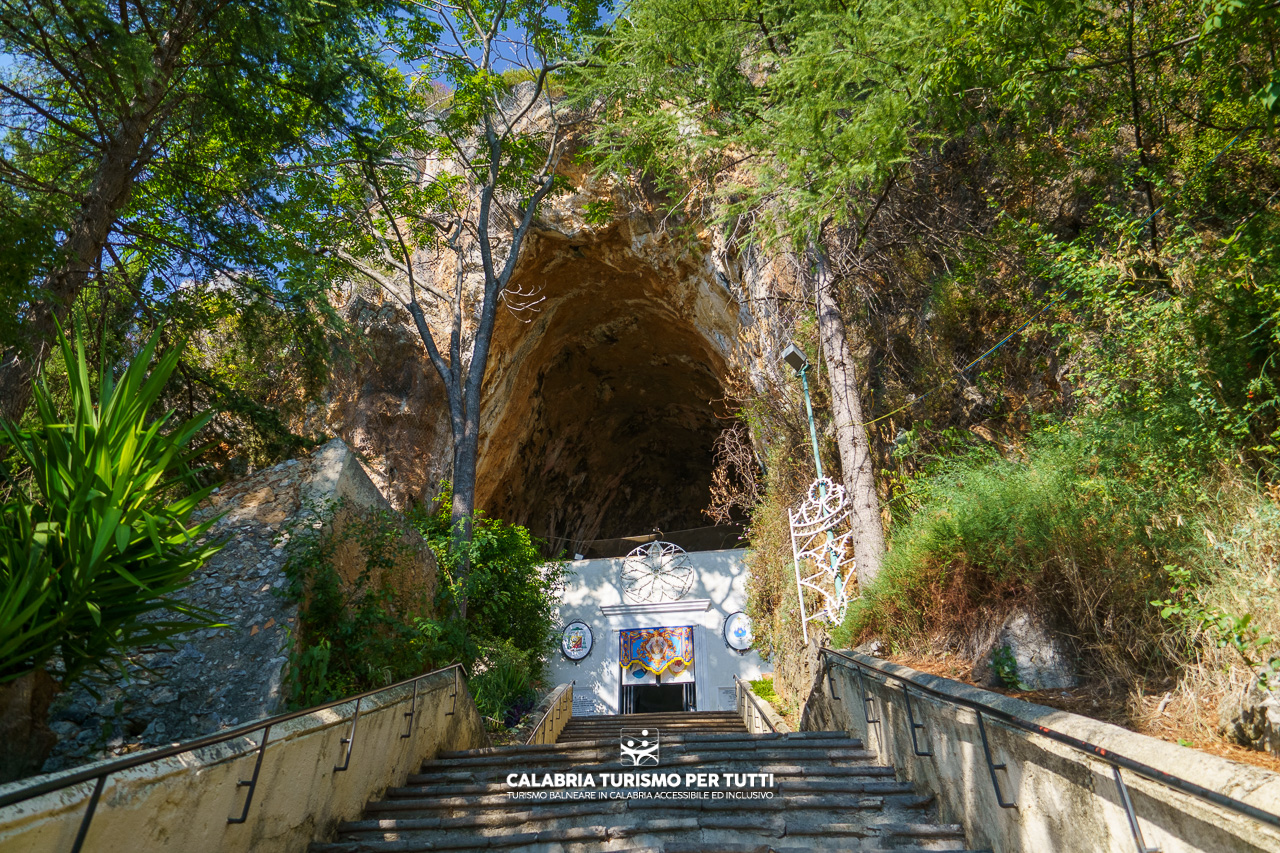
The Diocesan Sanctuary of Santa Maria della Grotta, known primarily as the Sanctuary of the Madonna della Grotta, is one of the main places of worship on the Riviera dei Cedri. Situated at the foot of Mount Vingiolo, it is reachable by climbing a long staircase from which you can admire the entire Gulf of Policastro. The sanctuary is spread across three caves located on different levels, each with large natural openings that allow air and light to filter in, creating a unique atmosphere.
The lack of confirmed information about the origins and how the statue of the Madonna arrived in Calabria gave rise to a “legend,” which is so deeply felt that it is considered a documented historical fact by the local people.
The legend narrates that in the 14th century, a merchant ship loaded with goods stopped in front of the coast of what is now Praia a Mare due to a sudden calm (bonaccia). The sailors attributed this to a statue of the Madonna kept by the Catholic captain, and thus decided to throw it into the sea. The captain, however, docked and saved the wooden statue, placing it on a large boulder inside one of the mountain’s caves. The statue, discovered a few days later by a young shepherd, was taken to the church in Aieta, but the next day it was found again on the boulder where the captain had placed it. The creation of the sanctuary is attributed to this miraculous event and the presumed will of the Madonna to remain in that location.
Passing through the entrance gate, you enter the first cave. On the right, you immediately notice the large boulder on which, according to the legend, the statue of the Madonna with Child was placed in 1326. After ascending another staircase, you enter the largest cave, where, on the right, there is a chapel built by Bishop Tiberio in the sixteenth century. Inside this chapel is a marble statue of the Madonna with Child called the “Snow” Madonna. Finally, you access the third cave where a chapel has been built to house the statue of the Madonna, which is placed in a niche on the high altar.
The Sanctuary is the focus of one of the local community’s most heartfelt celebrations: the patron saint festival in August, which commemorates the arrival of the Madonna at the caves of Mount Vingiolo in 1326 and features the suggestive sea procession among its events.
historical itinerary
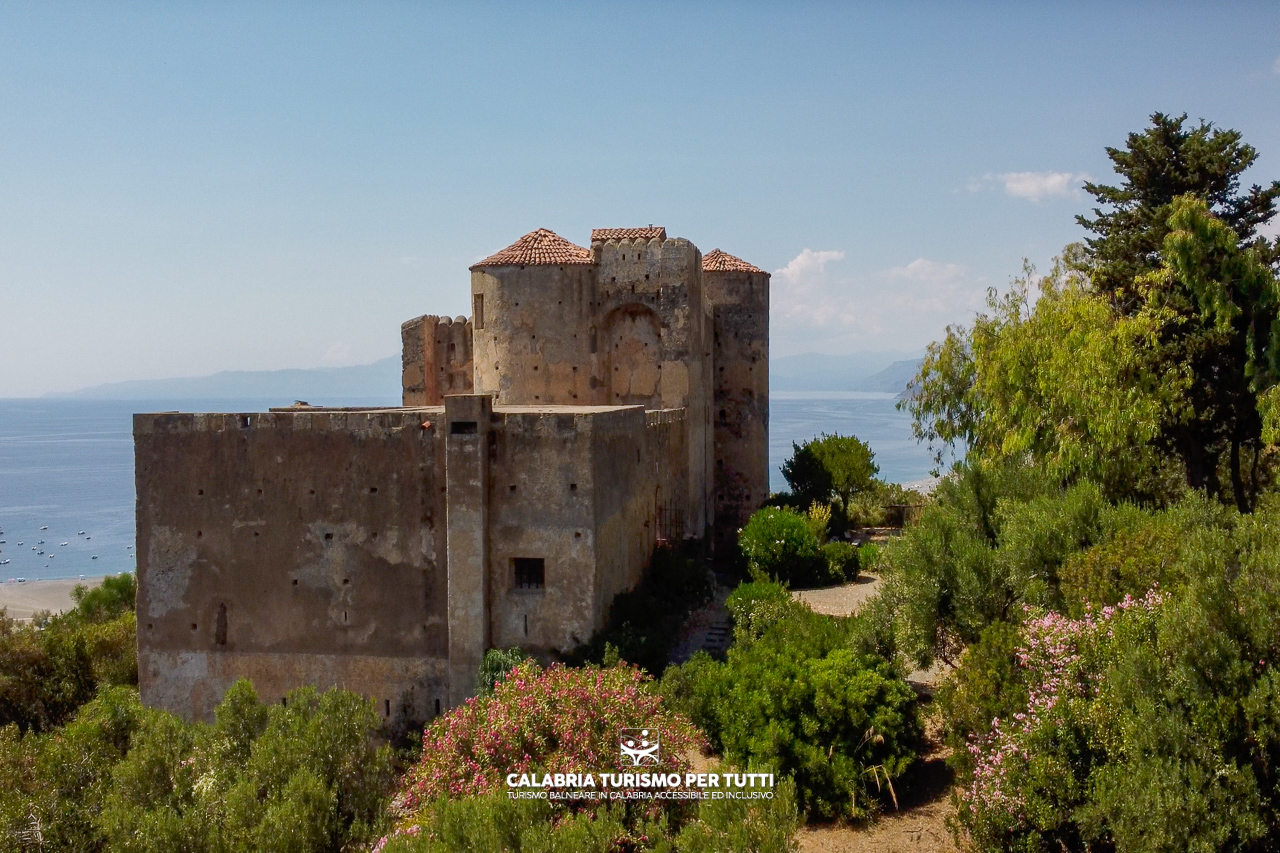
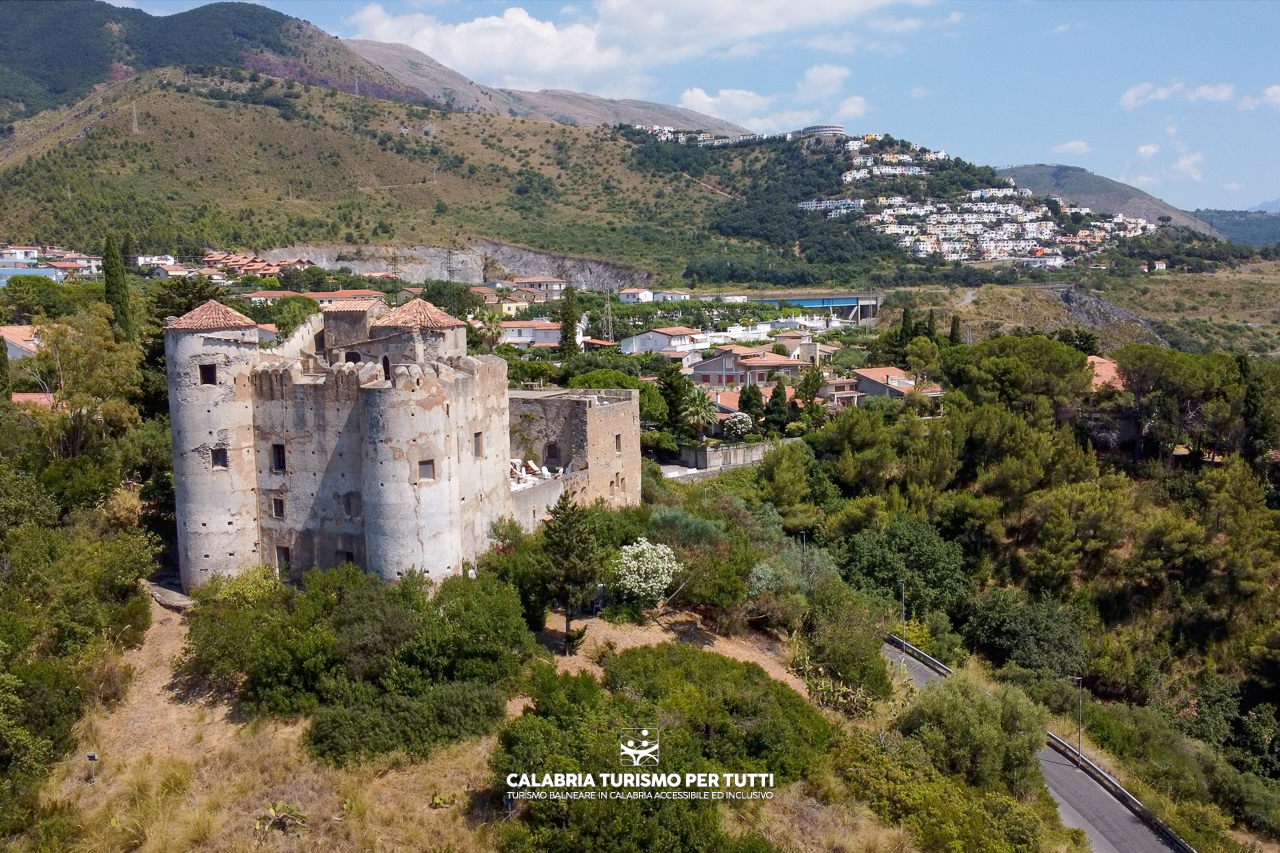
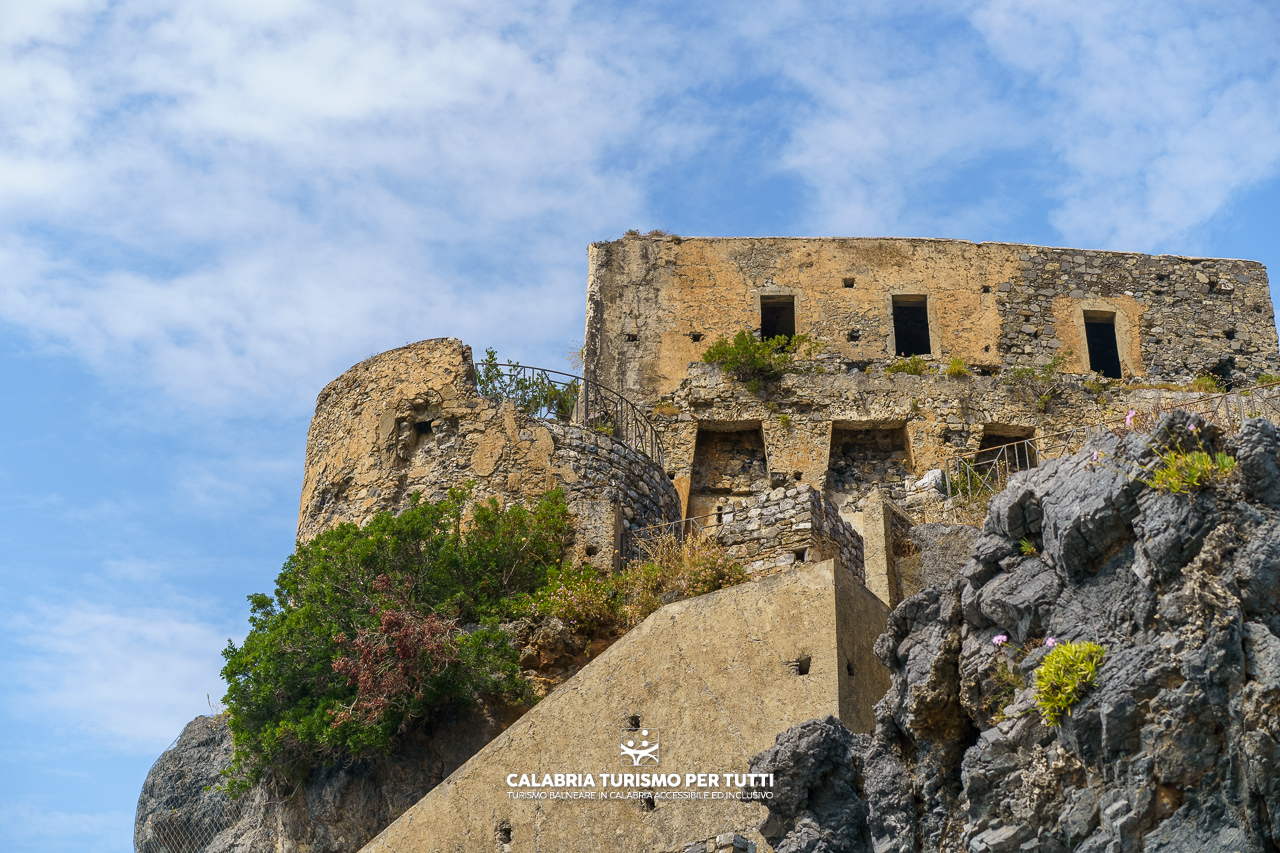
The second is a historical itinerary that begins on a small hill, in front of Dino Island, the location of the Fiuzzi Castle, also known as the Castle of Praia a Mare.
The structure was built between the 12th and 13th centuries as a military fortress by order of Charles, Duke of Calabria, son of Robert, King of Naples. Its main function was the defense of the coast from Aragonese and Saracen incursions during the Norman domination.
At the end of the sixteenth century, the structure lost its military role and was transformed into a stately residence. The local feudal bishop used it as a summer dwelling. In the eighteenth century, the fiefdom passed to the Spinelli family.
The building has a rectangular layout, with two cylindrical corner towers connected by large crenellated walls. It was restored in the early fifties by Alessandro Cosentino of the Marquesses of Ajeta, and the family’s coat of arms is still visible on the entrance portal.
The entire complex is surrounded by typical Mediterranean scrub. A small chapel is located in the garden, used for ceremonies; in fact, the castle, which is privately owned, is currently used for tourist accommodation.
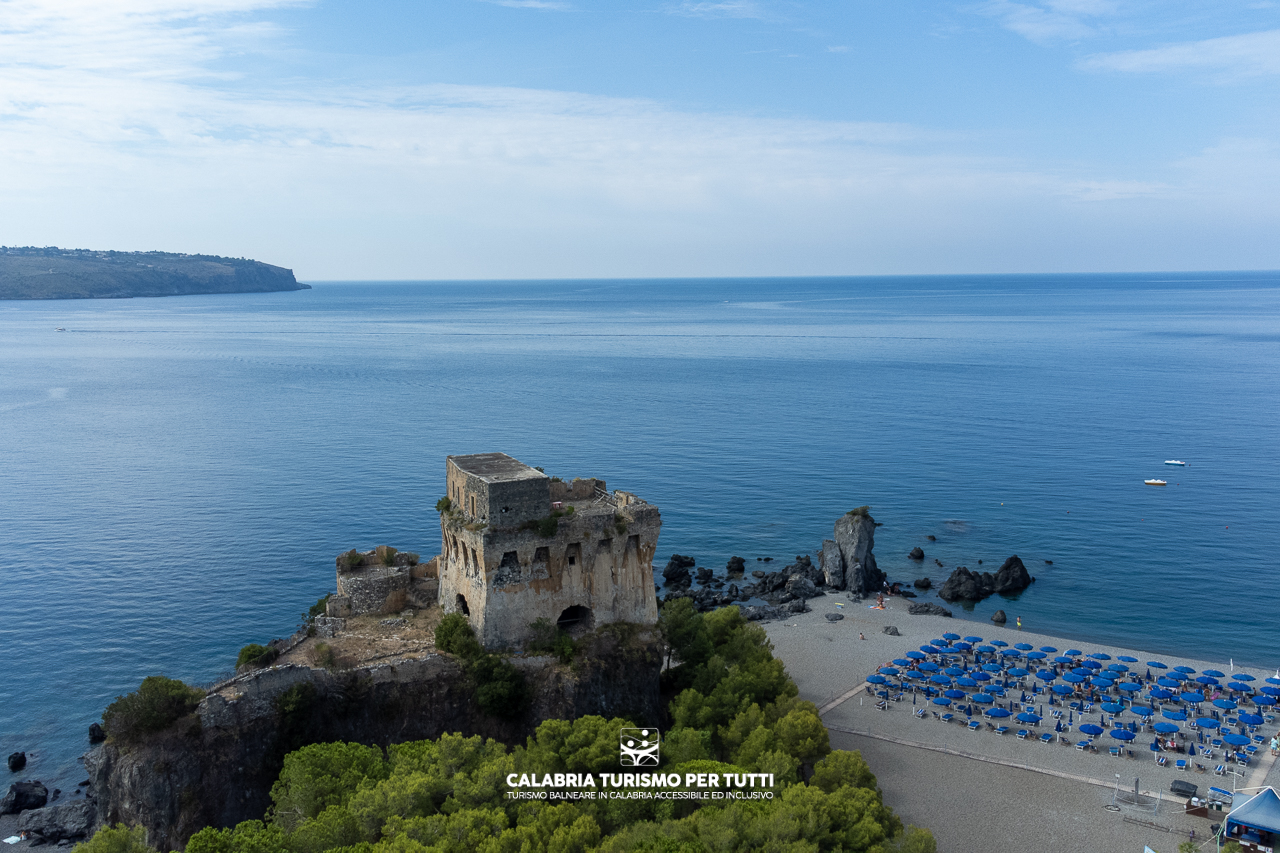
The Fiuzzi Tower, located on a rock close to the beach, opposite Dino Island, was built between the 15th and 16th centuries to defend the coast from Turkish and Saracen incursions. During that period, the Calabrian coasts were frequently threatened by Ottoman pirates who plundered villages and cities, endangering local populations.
This tower was part of a vast coastal sighting and defense system, designed to protect the territory from raids and attacks. Its strategic position guaranteed a wide view of both the mainland and Dino Island, another crucial observation point.
Built of stone to withstand assaults and weathering, the Fiuzzi Tower has a massive, rectangular structure. It was also known as “cavallara” (of the horse) because it could be reached on horseback from the mainland.
Nature itinerary: Dino Island
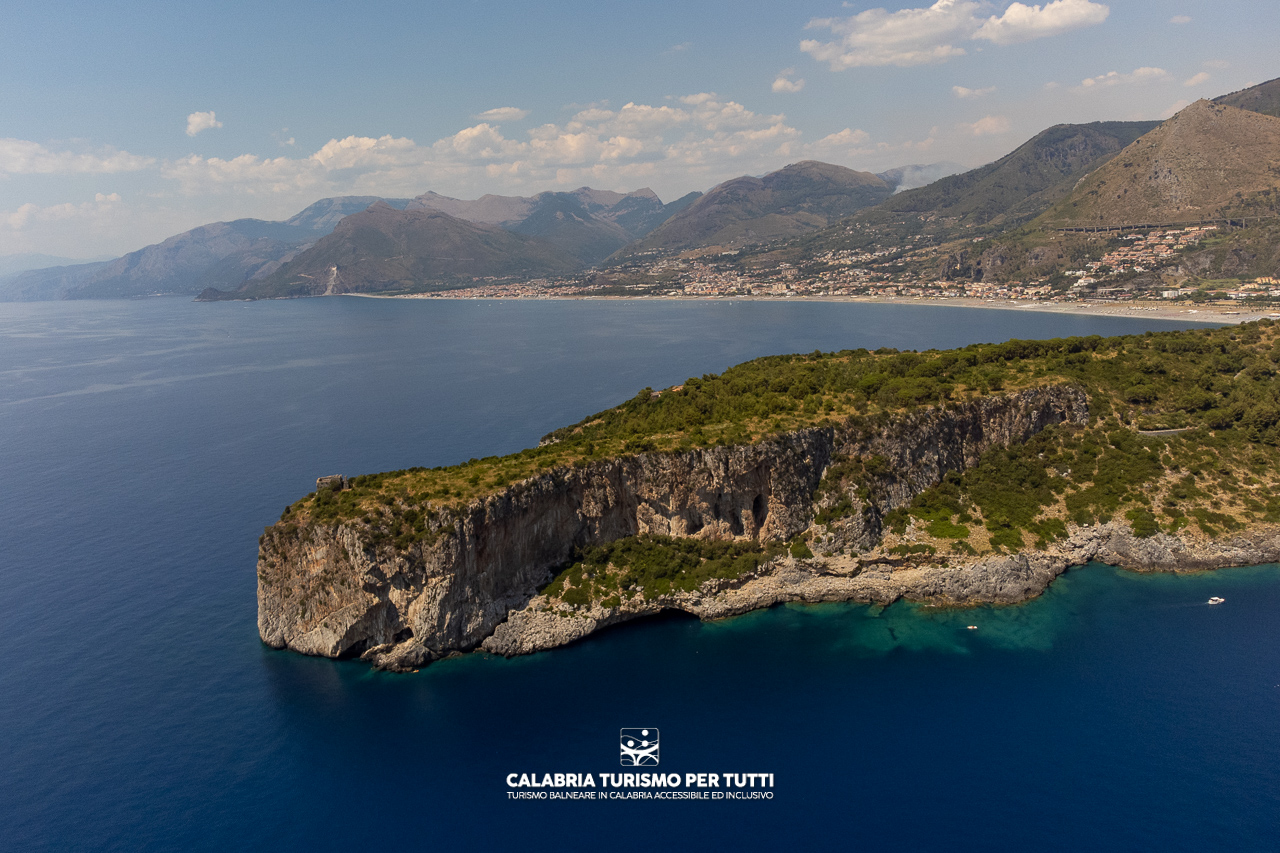
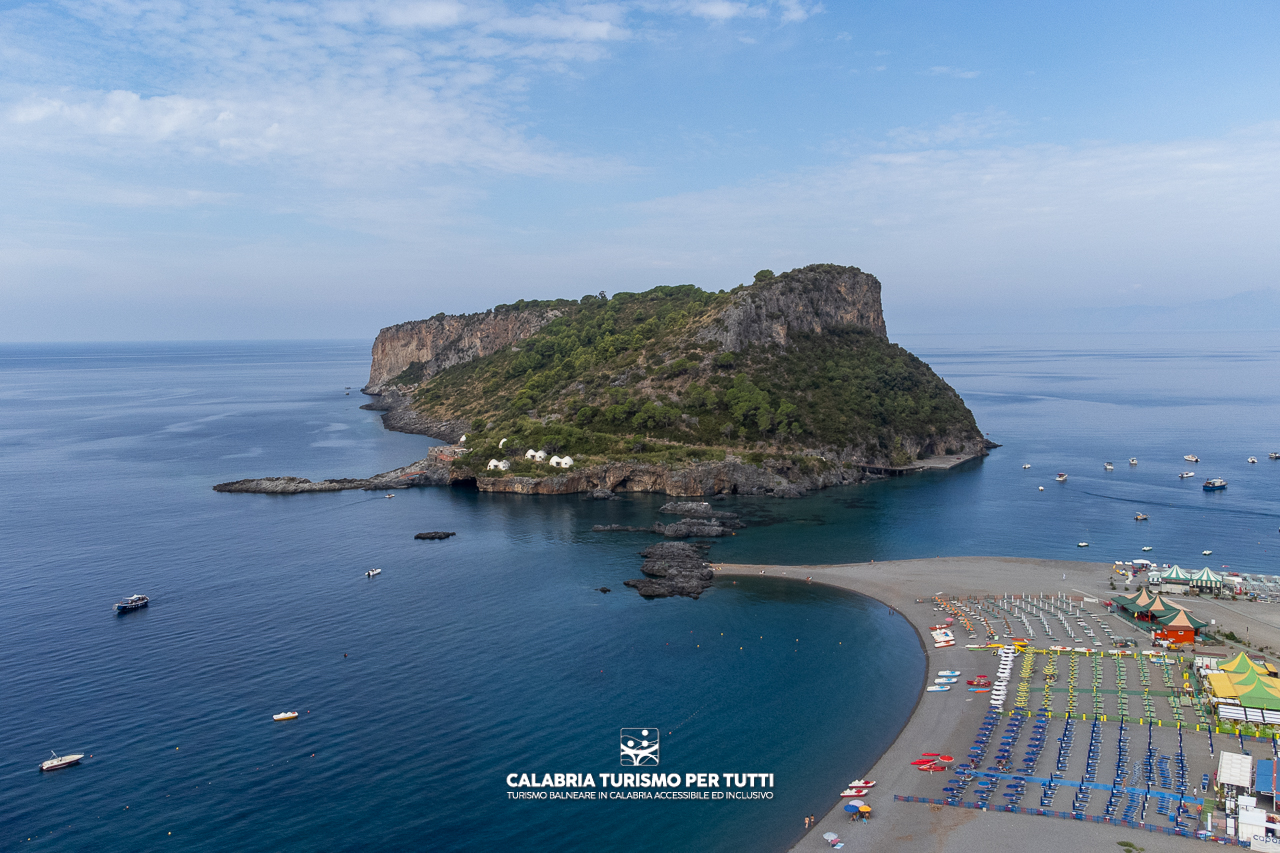
The third itinerary leads to the discovery of Dino Island, the largest of the Calabrian islands, which rises in front of the Praia a Mare coast. This fascinating corner of nature, rich in history and legends, owes its name, according to some, to the Greek term “dinè” which means vortex or storm. The small gulf that opens between the island and Punta di Scalea was feared by sailors for its frequent and violent storm surges.
Another interpretation, however, links the island’s name to an ancient temple dedicated to Venus, which, according to an eighteenth-century legend, was built here by Aeneas who supposedly crossed these waters during his journey to the coasts of Lazio. The name Aedina, later transformed into Dino, is thus said to derive from the Latin term “aedes,” meaning temple.
Dino Island has a characteristic ellipsoidal shape. The upper part is covered with dense Mediterranean scrub, while the center is occupied by a plateau with an altitude between 75 and 100 meters.
Its slopes offer very different landscapes: to the north, the island presents imposing vertical cliffs that plunge directly into the sea, creating a breathtaking spectacle. To the south, however, the profile is gentler, with slopes that descend towards the water to form a suggestive rocky shoreline.
Dino Island is a true biodiversity sanctuary, featuring various plant species and numerous habitats of community interest. But its true treasure is the system of sea caves, arranged along the perimeter of the island, shaped by erosion over the millennia: the Monk’s Cave (Grotta del Monaco), the Sardine Cave (Grotta delle Sardine), the Frontone Cave (Grotta del Frontone), the Waterfall Cave (Grotta delle Cascate), the Blue Grotto (Grotta Azzurra), and the Lion’s Cave (Grotta del Leone). Finally, the Gargiulo Cave (Grotta Gargiulo) is only accessible to very expert divers as its entrance is located at a depth of 18 meters.