
Roccella Jonica
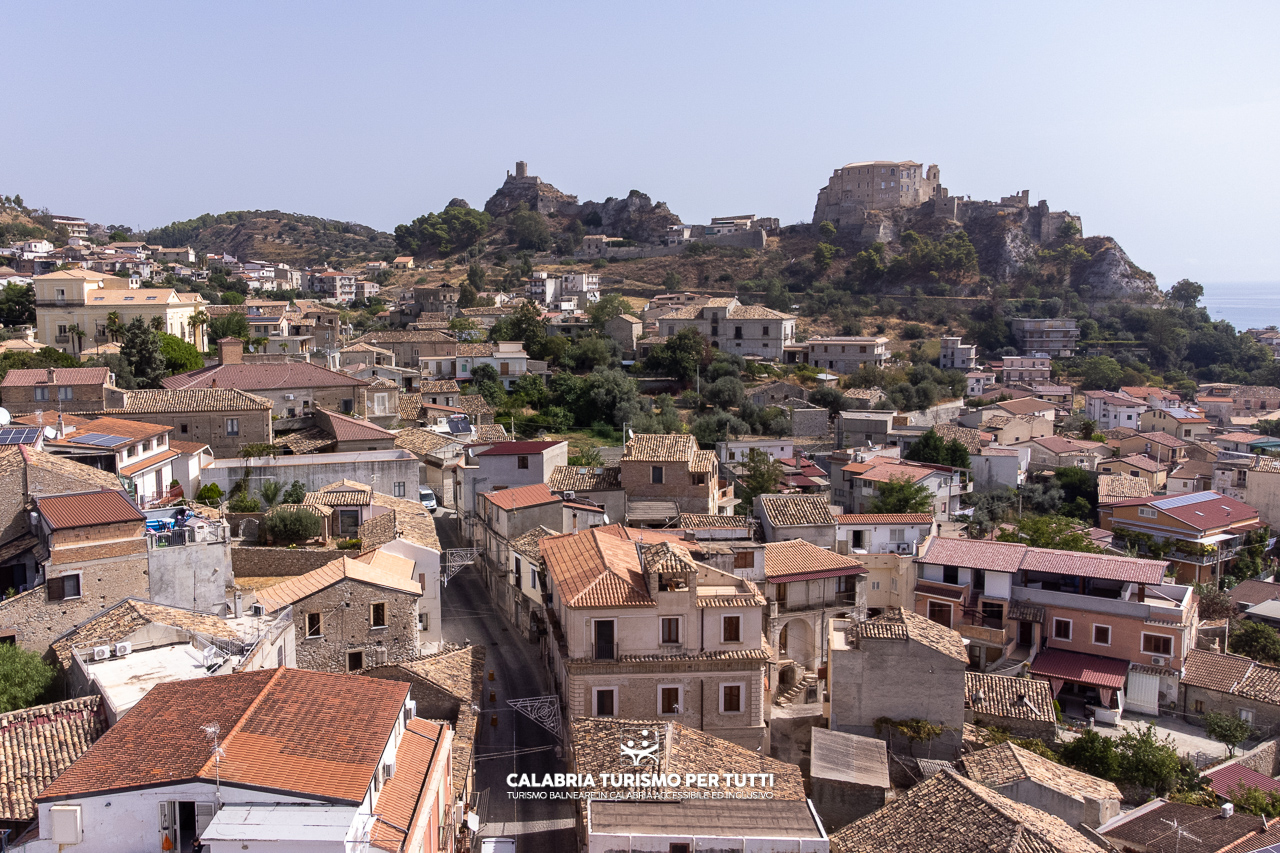
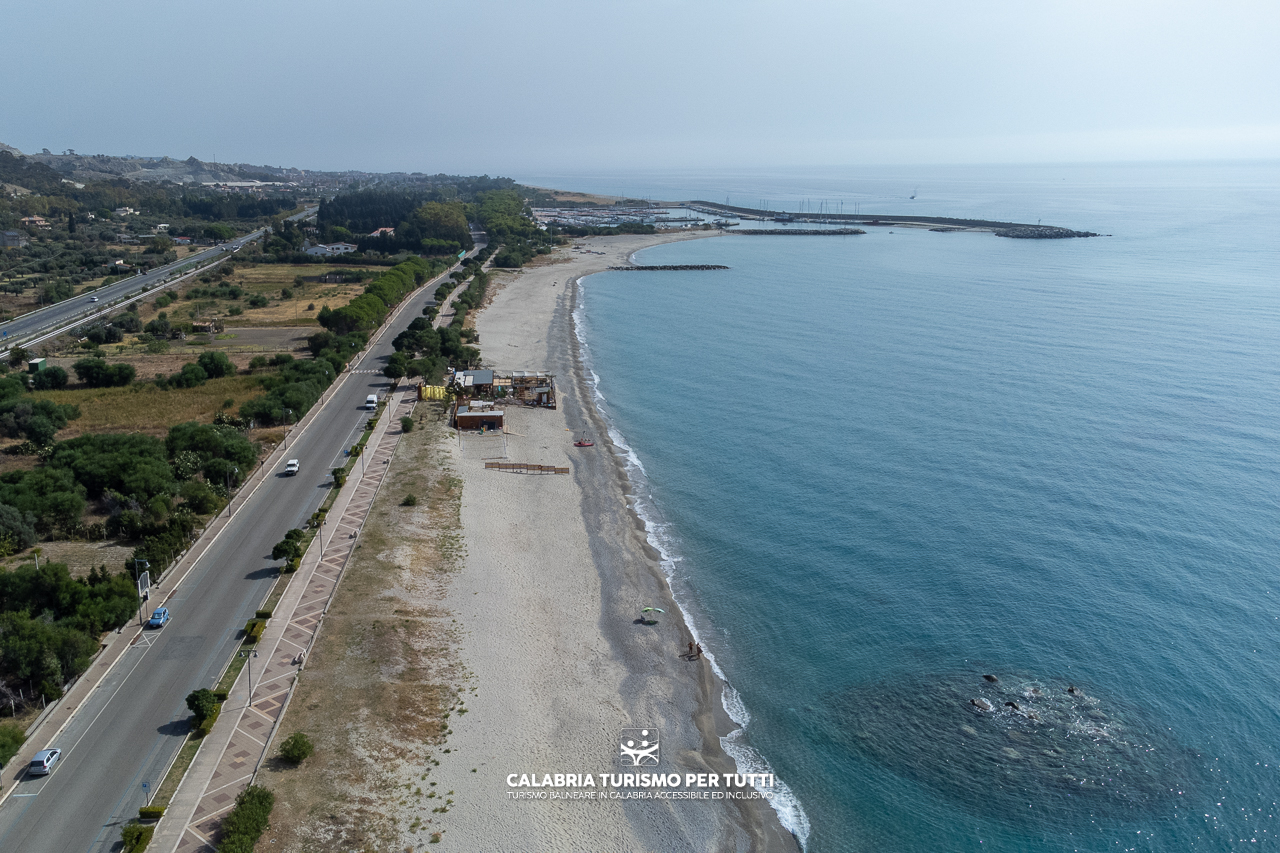
In Roccella Jonica, the beauty of the seaside village, with a promenade nearly four kilometers long, a crystalline sea, and a white sand beach where the Blue Flag flies—a prestigious international recognition that for many years now has certified its quality—mixes with the historical traditions of the ancient village, the churches and the narrow alleys of the historical center, and the noble palaces. The Roccella Jazz Festival “Rumori Mediterranei” review is very famous, which for decades has made Roccella Jonica a highly sought-after destination for jazz lovers.
Historical Itinerary
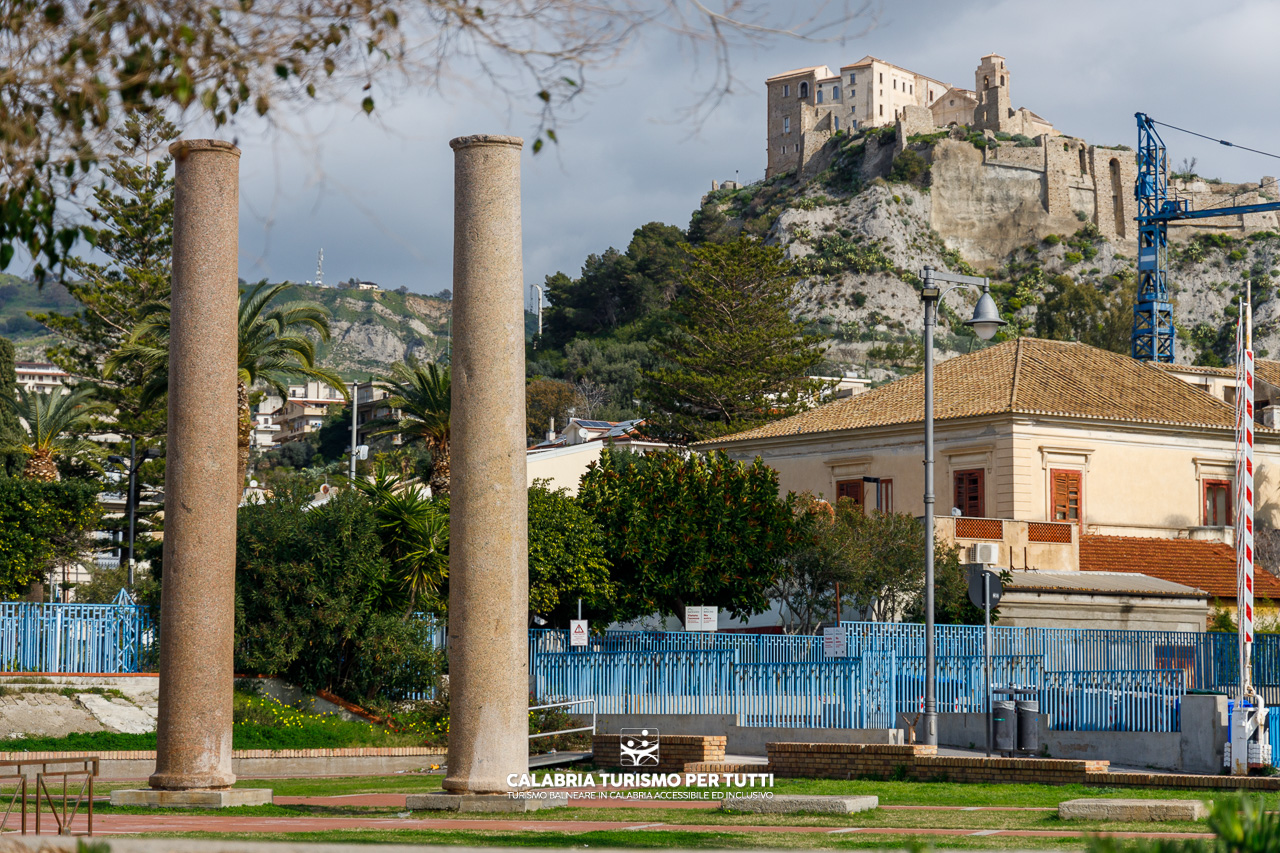
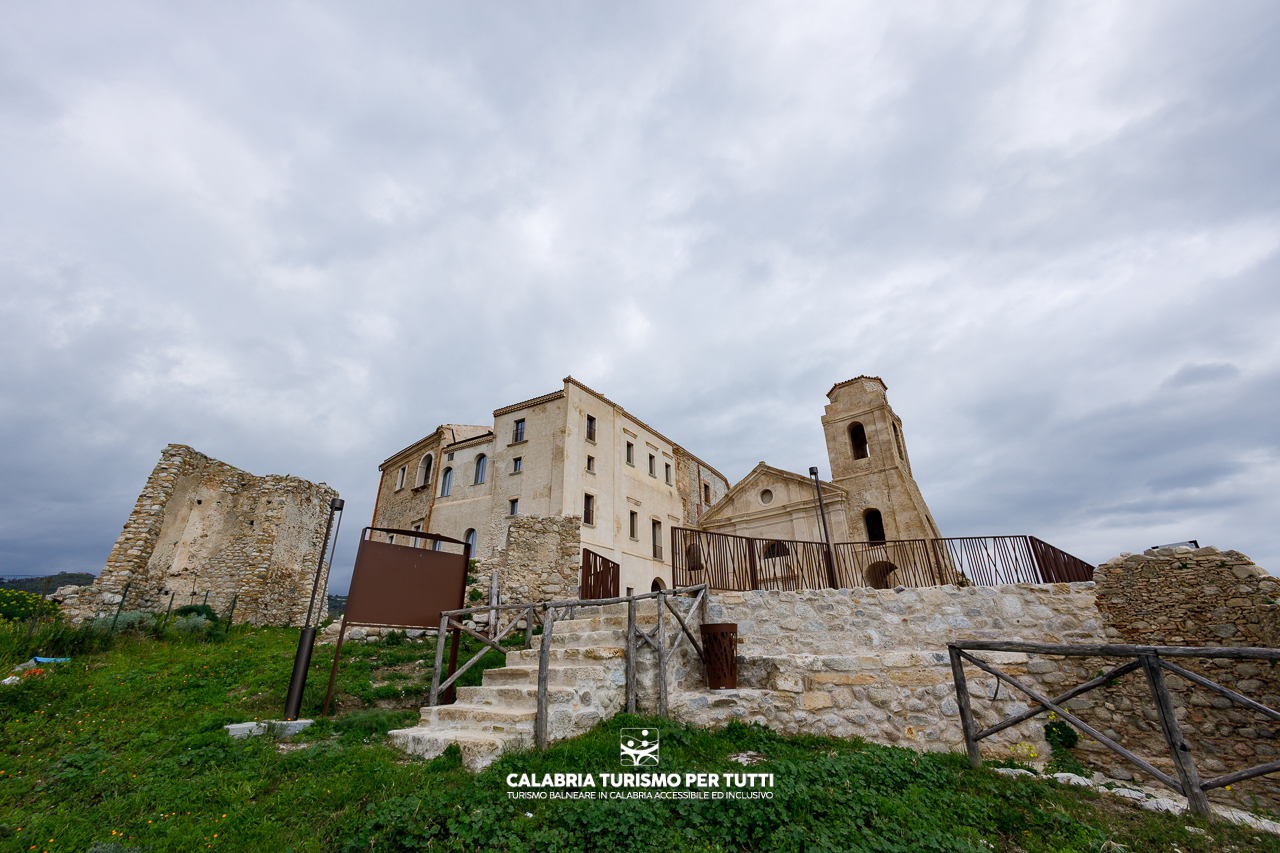
This itinerary unfolds within the Borgo Carafa, the oldest core of the town, which includes the Carafa Feudal Palace, the Mother Church of San Nicola di Bari, the city walls and bastions, and a few remains of the ancient settlement of Roccella di San Vittore, a fortified citadel overlooking the sea, which was granted as a fief to Gualtiero da Collepetro in the 13th century. In 1479, the citadel, then simply called La Roccella, was granted as a fief to Jacopo Carafa and remained with this family until 1806, the year feudalism was abolished. The castle, originally erected as a defensive position, was reinforced during the Aragonese period by Antonio Centelles and took on the appearance of a feudal palace in the eighteenth century with the additions made by the Carafa della Spina family. Today, only the scarped base that constitutes its perimeter remains of the original castle.
The palace, which has a quadrilateral plan, is built around a central courtyard characterized by a star-shaped paving. The main entrance is preceded by a magnificent lithic portal, surmounted by the coat of arms of the Carafa della Spina family. From the courtyard, a limestone staircase led to the upper floors, which housed the princes’ apartments, while the rooms below were intended for kitchens and warehouses. Adjacent to the palace is the Mother Church of San Nicola di Bari, which is now used as a conference hall. The Carafa family once had direct access inside the church through a small choir located on the first floor, which has since been destroyed.
Museum Itinerary
The Roccella Immersive Multimedia Museum (Musmir) is located inside Palazzo Carafa and offers a fascinating experience that guides visitors along two thematic paths. The first follows a chronological line and recounts the history of Calabria and Roccella Jonica: from prehistory, through the era of Greek colonization and the Roman age, up to the twentieth century, with a particular focus on the birth and importance of the Jazz Festival. The second itinerary is dedicated to the Carafa della Spina family, a key figure in local history. This path winds through the very wing of the castle that once housed their apartments.
The museum distinguishes itself by its use of modern technologies and the most advanced museum trends, with the aim of offering an immersive experience that combines edutainment and gamification. The exhibition spaces are enriched with multimedia, video projections, augmented reality, and other interactive solutions that engage visitors in a dynamic and enjoyable way. At the same time, visitors can benefit from the presence of explanatory panels that offer detailed and in-depth information on the exhibited objects and history. The combination of historical narration and interactive technologies makes it suitable for all ages, engaging both history enthusiasts and younger visitors, who can learn through play and interaction. This museum is a perfect example of how technology and tradition can merge to create a unique experience.
Religious Itinerary
The first itinerary begins with a visit to the Sanctuary of Maria SS delle Grazie, which is accessed via a staircase dating back to the eighteenth century. Located at the foot of the rocky promontory on which the ancient village stood and surrounded by rich, green vegetation, oral tradition holds that it was built in 1545 by the Palermitan sailor Onofrio Buscemi, who was caught in a violent storm off the coast of Roccella. He and his crew were saved, and so he built this sanctuary at the point where he landed, fulfilling a vow made to the Madonna delle Grazie, the protectress of fishermen and sailors. In reality, it stands on a more ancient church dedicated to Saints Peter and Paul. Archival sources indicate that its construction began in September 1737 with the laying and blessing of the first stone, and it was completed in 1747. The love and devotion of the people of Roccella for the Madonna continues over time, and every first Sunday of July, her statue is carried in a barefoot procession by fishermen through the streets of the town and then on a boat for the traditional procession at sea.
The Convent of the Order of Friars Minor was built by the will of Prince Fabrizio Carafa in 1614, with the annexed Church of the Conception (dedicated to St. Joseph from the end of the 18th century). Today, what remains of this complex are the church, inside which a painting of the Immaculate Conception attributable to the Neapolitan school of the 17th century can be admired, and part of the cloister.
The Church of Sant’Anastasia was erected by the Jesuits during a mission dating back to 1753 and was originally dedicated to the founder of the Order, Saint Francis Xavier. Its single-nave interior houses the statue of the Sorrowful Madonna (Madonna Addolorata), a canvas depicting the Crucifixion of Christ that came from the altar of the Mother Church in Palazzo Carafa, and a canvas with the Madonna of the Rosary, which came from the ancient Church of Santa Anastasia destroyed by the 1783 earthquake.
The Church of San Nicola ex Aleph, originally dedicated to Saint Victor, was built in 1526 and entrusted to the confraternity of the same name. After the 1783 earthquake, the parish of San Nicola ex Aleph was transferred there. Initially, it had a single oriented nave and a bell tower on the north-east side. During the 18th century, the building underwent significant modifications: the orientation was inverted, it was enlarged to three naves, and a new bell tower was added on the south-west side. In the early 20th century, the church was transformed again, reverting to a single nave, this time with an elliptical plan. Precious works of art are preserved inside: a refined 18th-century marble altar with the bust of Saint Francis, created by the sculptor Pisani of Serra San Bruno; the tomb of the Bishop of Gerace, Pier Domenico Scoppa, who died in Roccella in 1797; and a 17th-century painting, attributed to the school of Mattia Preti, which depicts Saint Victor on horseback in Roman armor piercing a Saracen.